
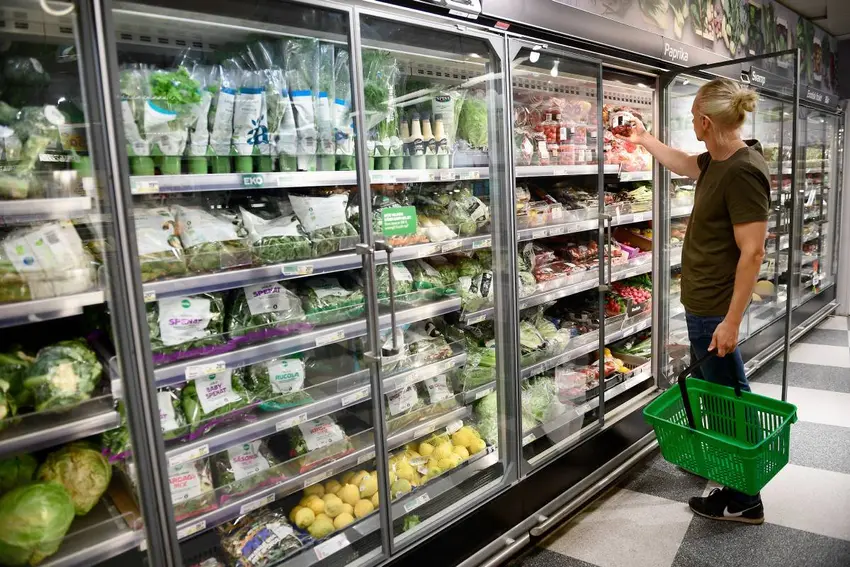
Between August 2021 and May 2024, food prices in Sweden have surged by around 25 percent, according to Statistics Sweden (SCB).
This increase has been especially pronounced in specific categories like fruits, vegetables, and dairy products.
READ MORE:
Some items, such as cauliflower and sugar, have become as much as 70 percent more expensive. Honeydew melon prices have increased by 65.3 percent, and fresh salmon has seen a 61.6 percent rise.
Inflation, which has remained above the central bank's target of two percent for almost three years, is now approaching normal levels.
At the same time, the rapid increase in food prices has begun to slow down, with recent months showing stabilisation.
But will this development hold throughout 2024?
An expert's take on 2024 food prices in Sweden
Despite the increases in food prices in recent years, Arturo Arques, a private economist at Swedbank, told The Local Sweden that the outlook for the rest of 2024 is currently more optimistic.
"We believe that food prices will follow the general price trend in Sweden," Arques said.
READ ALSO:
"While some factors like fuel, energy, grain, and mineral fertiliser costs typically lead to higher food prices, we expect relatively stable prices for the remainder of the year," he added, noting that Swedbank expects food price development to align with the general price development in Sweden.
"We believe that inflation will continue to fall and land close to the Swedish central bank's inflation target of two percent later this year."
Lack of competition affecting prices
Last month, the Swedish Competition Authority (Konkurrensverket) announced that price increases for consumers in the country have been higher than those for grocery stores.
The lack of competition in the grocery industry is a significant factor behind this discrepancy, Martin Bäckström of the Swedish Competition Authority told Swedish national public television broadcaster SVT in late June.
"If the competition had worked better, we don't think the prices would have been as high," Bäckström said.
He highlighted that the Swedish grocery industry has too few players and too many obstacles for new entrants, which limits competition and keeps prices high.
Bäckström provided an example with butter: during the period measured, the trade price increased by 28 kronor, but the consumer price went up by 36 kronor.
According to the competition authorities, this difference indicates that the cost increases are not entirely justified by trade costs alone.
Comments